
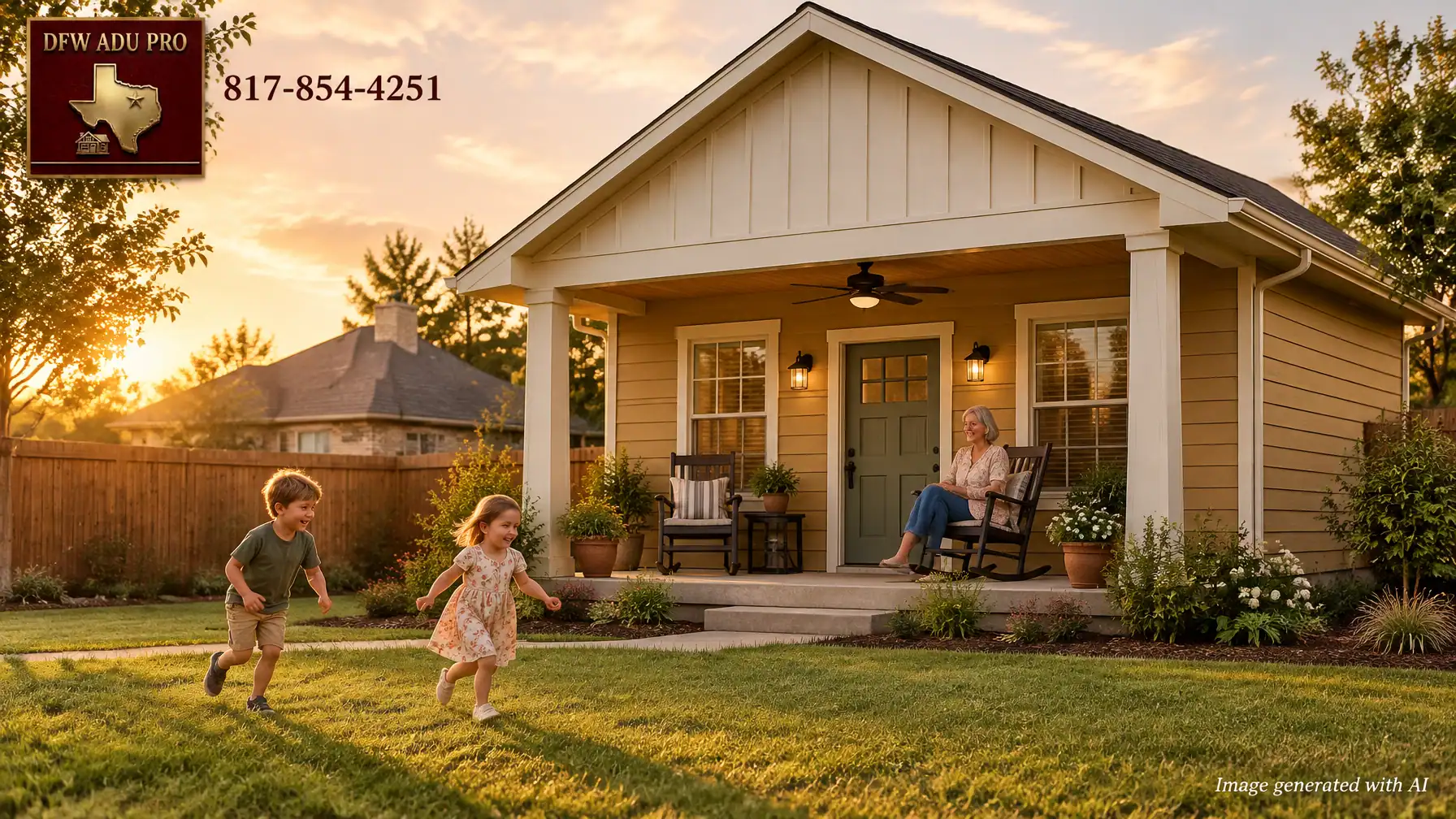
North Texas weather keeps homeowners on their toes: blazing summer sun, sudden hail, humid spells, hard freezes, and rain pushed sideways by strong winds. A backyard cottage needs an exterior chosen for more than a pretty first impression. It needs materials and details that can take the changing seasons, and a practical maintenance routine that helps preserve their good looks.
That’s why a warm Oklahoma Cream and Artisan Gold combination of board-and-batten and horizontal lap siding is such a fitting look for a guest house (ADU). Pair it with a covered front porch, a ceiling fan, and a couple of rocking chairs, and you have a welcoming space for an aging parent, a grown child, or visiting family. The porch may be where the memories happen; the siding is part of what helps the cottage feel at home year after year.
What fiber cement siding can, and cannot, do
James Hardie describes its fiber cement products as “Engineered for Climate,” with product formulations intended for different climate conditions. Its Hardie™ Zone System explains that HZ5 products are designed for freezing temperatures and seasonal swings, while HZ10 products are made for hot, humid conditions and intense sun. The right product is location-specific, so homeowners and builders should verify the product and installation requirements for the particular North Texas address rather than assume a zone.
The material characteristics are relevant here. Fiber cement is designed to resist moisture-related damage, and James Hardie publishes warranty terms for specified products that include limited coverage for up to 30 years. That is not a promise that siding will never be damaged or that every finish, installation detail, or storm-related issue is covered. Warranty terms, exclusions, and finish coverage can vary; review the current documents for the exact product being installed.
Hail deserves particular attention in North Texas. Fiber cement may offer resilience against impacts, but no siding should be described as hail-proof. After a significant storm, inspect the siding, trim, roof edges, and window areas for visible damage. If you suspect a problem, document it and consult a qualified professional and your warranty documents before making repairs.
Heat and ultraviolet exposure also put exterior finishes to the test. A lighter, warm-toned palette can suit a cottage beautifully, but the finish still needs ordinary care. A factory-applied finish and a field-painted finish may have different care instructions and warranty terms, so keep the product and paint information with your home records.
Weather resilience is a whole-wall job
Siding is one part of the exterior, not a substitute for correct installation and water management. Wind-driven rain can find weak points around windows, doors, penetrations, trim joints, and roof-to-wall transitions. Flashing, drainage, compatible sealants, proper clearances, and installation to the manufacturer’s instructions all matter.
Humidity and freeze-thaw snaps make routine observation worthwhile. Water should drain away rather than linger against the walls, and sprinklers should not soak the siding day after day. Keep gutters clear, check that downspouts carry water away from the foundation, and avoid building up soil or mulch against the siding. These small habits help protect the exterior system as a whole.
A slab foundation also supports a sense of structural permanence: the guest house is designed as a lasting part of the property, not a temporary backyard shed. The foundation, drainage, framing, weather barrier, flashing, and siding details should all be considered together during planning and construction.

A year-round care checklist for your guest house (ADU)
A little attention through the year can help you spot small concerns before they become bigger repair questions. Follow the siding manufacturer’s current care instructions and use the appropriate products for your finish.
Spring: look over the exterior after winter. From the ground, check for loose or damaged siding, peeling paint, open or worn caulk joints, and debris in gutters. Look around windows, doors, trim, and utility penetrations. If anything appears damaged or out of place, ask a qualified professional to assess it rather than covering it up.
Summer: wash gently and manage landscaping. James Hardie’s homeowner care and maintenance guide recommends washing exterior surfaces every six to twelve months with a garden hose and using a soft, nonmetal brush or soft cloth. Work gently in the direction of the planks. Avoid aggressive pressure washing and harsh cleaners that could damage the finish. Trim shrubs so they do not press against the wall, and adjust sprinklers to avoid repeatedly soaking it.
Fall: clear the path for rain. Clean gutters and downspouts, remove leaves from places where water collects, and make sure runoff moves away from the building. Look for branches that could scrape the siding or become debris in a storm. Keep required clearance between the ground and siding; do not pile soil, mulch, or landscaping against the wall.
After hail or wind: inspect when conditions are safe. Check for visible chips, dents, displaced trim, damaged sealant, or signs of water intrusion. Photograph concerns and contact your builder or a qualified siding professional for guidance. A visual inspection is not a substitute for a professional evaluation when damage is suspected.
Before winter: protect drainage and finishes. Confirm gutters are flowing and landscaping is not directing water toward the building. Avoid direct contact between siding and deicing salts. If you see a small finish issue, follow the specific product and paint manufacturer’s repair guidance; do not assume one touch-up method suits every surface.

Designing a porch and exterior that work for family life
A well-planned front porch ADU offers more than curb appeal. Shade, a ceiling fan, comfortable seating, and potted plants can make the porch a useful place to visit in the heat of a Texas afternoon. For multigenerational living, it can create an easy point of connection: grandma has her own in-law suite, but she can still watch the children play and join the family when she likes.
The siding combination can help the structure feel like a natural extension of the main home. A board-and-batten guest house can add vertical character at the gable, while horizontal lap siding creates a familiar scale across the walls. Oklahoma Cream and Artisan Gold bring warmth without overpowering the property. Thoughtful matching of rooflines, trim, and proportions reinforces the impression that the cottage belongs there.
Homeowners searching for a hardie siding adu, a granny flat, or an “adu with porch texas” often have a practical goal behind the search: a durable, comfortable place that makes staying close to family easier. The same is true for homeowners comparing guest house builders in Keller, TX. Material selection matters, but so do property-specific feasibility, local approvals, site conditions, and a builder’s ability to coordinate the project.
What does a 500 sq ft guest house cost?
A 500 sq. ft. plan commonly begins around $125,000–$150,000. This is a build-planning starting range, not a siding-maintenance estimate or a promise of a final project total. Actual cost varies based on site conditions, utilities, foundation, size, and finish level. An early property review can help clarify what is included in a project scope and which site-specific items may affect the budget.
For a family considering a backyard cottage for a parent or grown child, the right guest house builder should be ready to talk through both the design and the property. DFW ADU Pro offers turnkey solutions, including site feasibility, design, full permit management, construction coordination, and the city submittal and inspection process.
DFW ADU Pro, a division of Boomer Group Inc., has been building detached guest houses in Tarrant, Denton, and Wise counties since 2001. Its PRO Construction affiliate ranks in the top 1% of Texas contractors based on verified permit history. The team focuses on slab foundations, seamless architectural matching, and practical spaces built for family use. Call 817-854-4251, email info@dfwadupro.com, or visit dfwadupro.com.
Explore guest house services, learn more about a Keller guest house builder, or request an estimate.
Planning disclaimer: Local zoning, permitting, HOA covenants, lot requirements, setbacks, utilities, and occupancy rules vary by location and property. Verify the applicable requirements with your local building or planning department and HOA before planning a guest house or relying on project-specific details.
James Hardie warranty terms and maintenance recommendations may change. Verify the current documents for the specific siding and finish products selected.
A division of Boomer Group Inc.
Leave a Reply