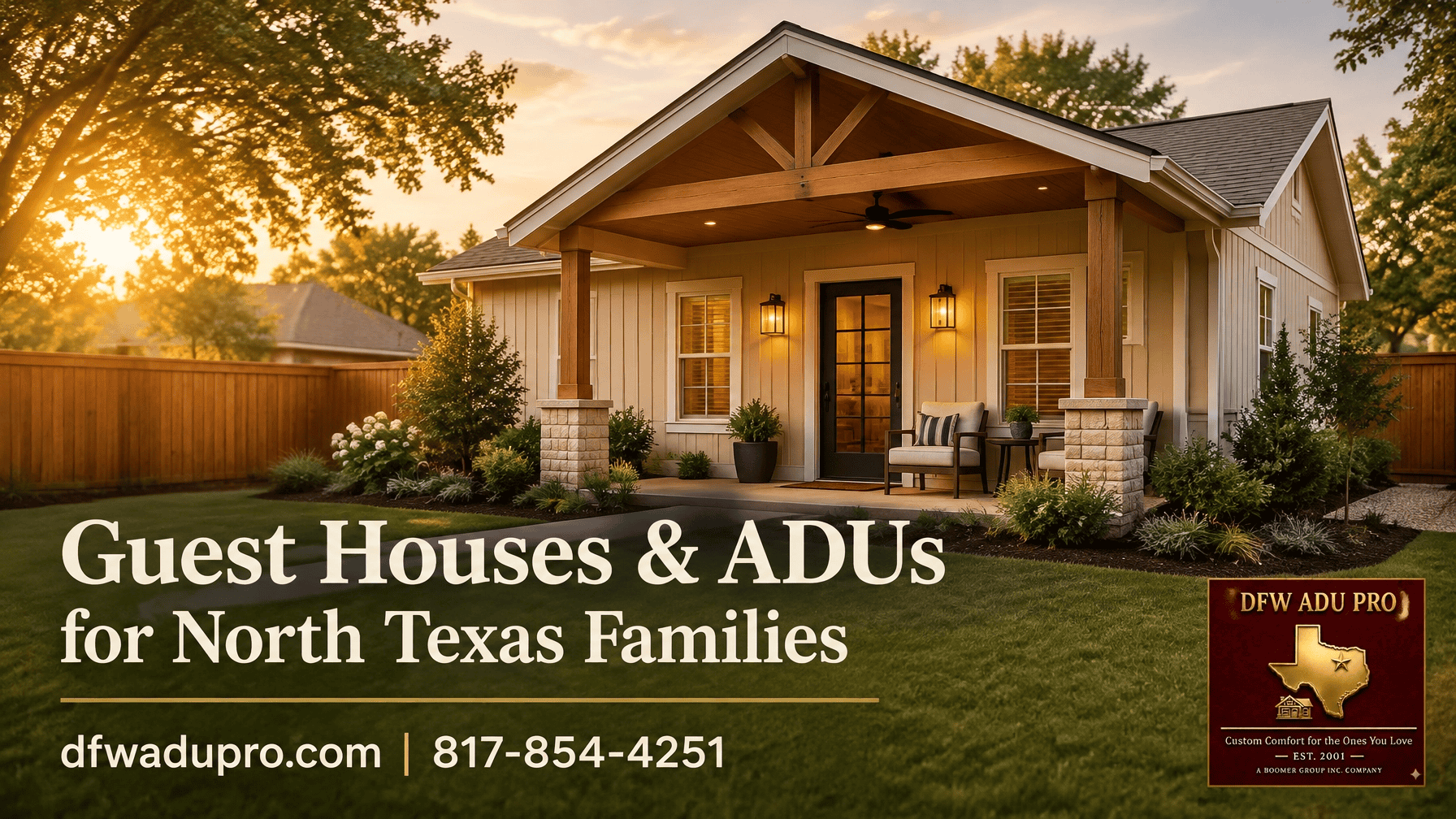
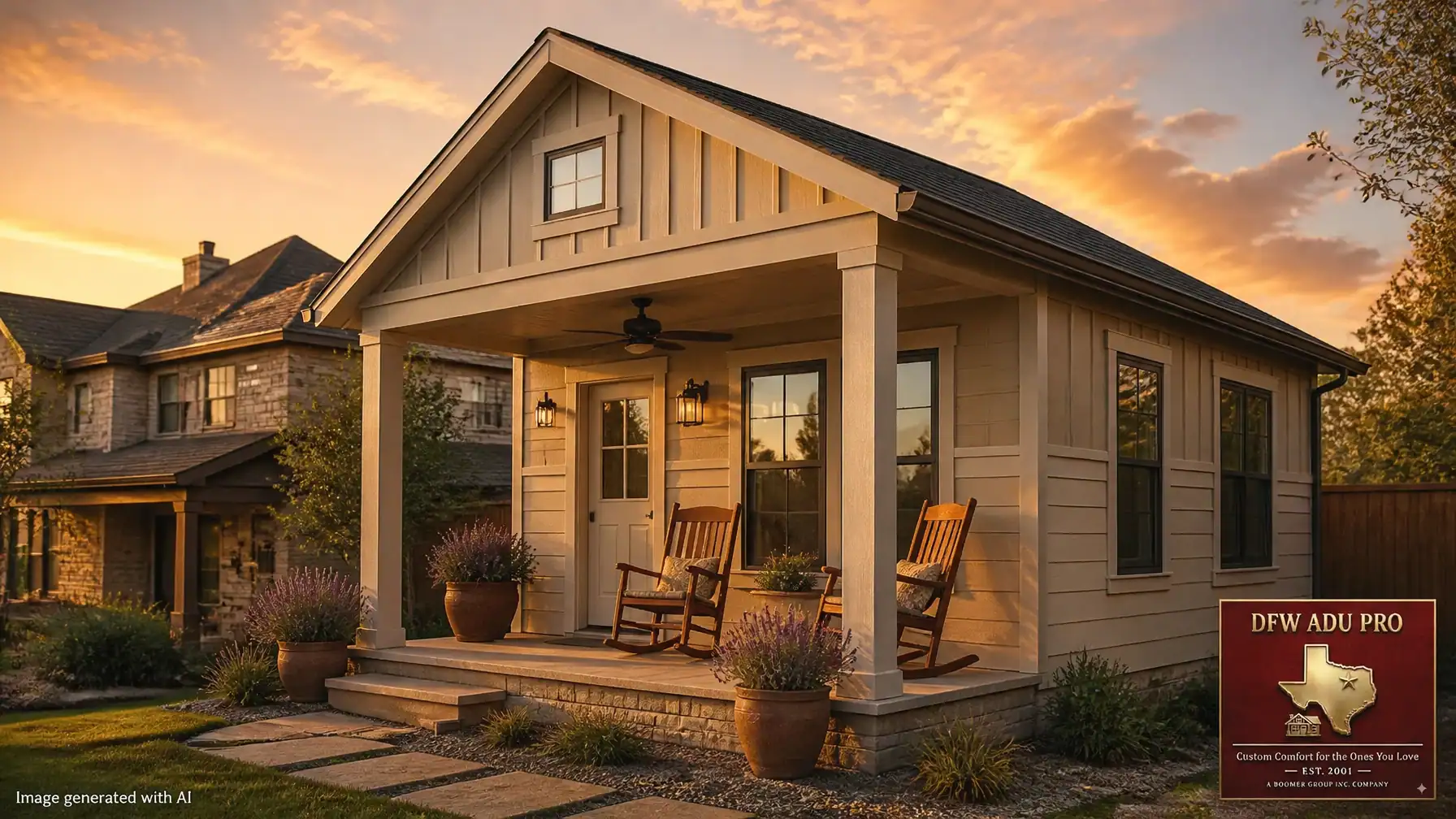
Image generated with AI
When you decide to add an accessory dwelling unit (ADU) to your property in Keller, Southlake, or anywhere across Tarrant, Denton, and Wise counties, you aren’t just building a "shed" or a temporary cabin. You are creating a permanent extension of your home: a place where your parents might live out their golden years or where your adult children can find independence while staying close to family.
One of the most frequent questions we hear at DFW ADU Pro, a division of Boomer Group Inc., is about the exterior: "Should we use James Hardie siding or go with full brick?"
In North Texas, this isn't just an aesthetic choice. It’s a decision that impacts your property value, your long-term maintenance, and, most importantly, your budget. As a top 1% ranked Texas contractor, we’ve seen how both materials perform under our unique climate. Here is the consultative breakdown of how to choose the right shell for your backyard cottage.
The Case for Hardie Siding: Performance and Style
For most North Texas families looking for a high-value, mid-priced solution ($125,000–$150,000 for a 500 sq ft plan), James Hardie fiber-cement siding is often the superior choice.
At DFW ADU Pro, we specialize in "architectural matching." This means we don't want your ADU to look like an afterthought. By using a combination of Hardie board and batten for vertical texture and horizontal lap siding for traditional lines, we can create a sophisticated, modern farmhouse or craftsman look that feels intentional and upscale.
Why Hardie Wins in the Backyard:
- Texas-Weather Tough: Hardie siding is specifically engineered for our climate. It’s non-combustible (a major plus for insurance and safety) and resists rot and termites. Whether it's a 105-degree August day or a sudden North Texas hail storm, this material holds its own.
- Color Flexibility: We focus on warm trend colors: tans, beiges, warm grays, and creams: that reflect a "Texas-friendly" vibe. Hardie’s ColorPlus® technology ensures the finish lasts for years without the constant need for repainting.
- Cost Efficiency: Hardie allows us to stay within that accessible $125k–$150k price point while still delivering a luxury feel. It is significantly lighter than brick, which means less stress on the soil and more flexibility in design.

Image generated with AI
The Appeal of Brick: Permanence and Prestige
While Hardie siding is incredibly popular, many homeowners in established Tarrant County neighborhoods prefer brick to achieve a seamless match with their primary residence.
Brick is the "set-and-forget" material of the residential world. It offers unparalleled thermal mass: helping keep the interior cool during our scorching summers: and provides a level of sound dampening that is excellent for high-density areas.

Image generated with AI
When Should You Choose Brick?
- HOA Requirements: Some communities in Southlake or Keller may have strict "masonry requirements" that mandate at least 75% or even 100% brick or stone.
- Longevity: While Hardie lasts for decades, brick is measured in centuries. If you view this ADU as a 100-year asset, brick is the way to go.
- Property Value: In certain high-end neighborhoods, a full-brick ADU may provide a slightly higher boost to your total property appraisal compared to siding.
However, be prepared for the investment. Brick requires more labor-intensive masonry work and a more robust foundation structure, which often pushes the cost of a 500 sq ft guest house beyond the $150,000 mark.
Structural Permanence: It Starts with the Slab
Regardless of whether you choose Hardie or brick, the most critical element of your ADU is the foundation. At DFW ADU Pro, we don't believe in "portable" buildings or temporary skids. Every project we undertake: from a simple granny flat to a complex primary suite expansion: is built on a engineered slab foundation.

Image from DFW ADU Pro marketing library
This structural permanence ensures your investment won't shift, warp, or settle poorly over time. When we handle your site feasibility and design, we take the North Texas clay soil into account to ensure your ADU remains a rock-solid part of your estate.
The "Grandma Approved" Front Porch
One detail we never compromise on: regardless of the siding material: is the front porch. In Texas, a porch isn't just an entry; it's a functional living space.
We design our backyard cottages with covered porches featuring:
- High-output ceiling fans to beat the Texas heat.
- Deep overhangs for maximum shade.
- Space for rocking chairs where a grandma can sit and watch her grandchildren play in the yard.
This "Texas-friendly" approach creates a bridge between the ADU and the main home, fostering the multigenerational connection that is at the heart of why we build.
Turnkey Solutions and Permit Management
Choosing between Hardie and brick is a big decision, but it’s only one of a hundred choices you'll have to make. This is why homeowners choose DFW ADU Pro. We offer full permit management and complete turnkey solutions.
We handle the city submittals in Keller, Southlake, and beyond. We manage the inspections, the plumbing, the electrical, and the architectural matching. You don't have to learn the bureaucratic learning curve of the local planning department: we’ve been doing this since 2001.

Image from DFW ADU Pro marketing library
The Final Verdict: Which Is Better?
- Choose Hardie Siding if you want the best balance of price ($125k–$150k), durability, and modern style. It’s the smart choice for most families who need a functional, beautiful in-law suite.
- Choose Brick if your neighborhood requires it, or if you want the absolute highest tier of longevity and are prepared for the higher price point.
At DFW ADU Pro, we are your expert partners in navigating these choices. Whether you are in Tarrant, Denton, or Wise county, we are here to help you build a space that honors your family and enhances your property.
Ready to start your project? Contact us today for a site feasibility consultation and let’s see what’s possible in your backyard.
A division of Boomer Group Inc.
Leave a Reply